It’s really easy to explain what change is and how it works.
Whether personal challenges, career re-imagination, or even shifting an organization through cultural transformation, it all boils own to 3 simple steps:
Turning your "I should..." into "I am..."
It’s really easy to explain what change is and how it works.
Whether personal challenges, career re-imagination, or even shifting an organization through cultural transformation, it all boils own to 3 simple steps:
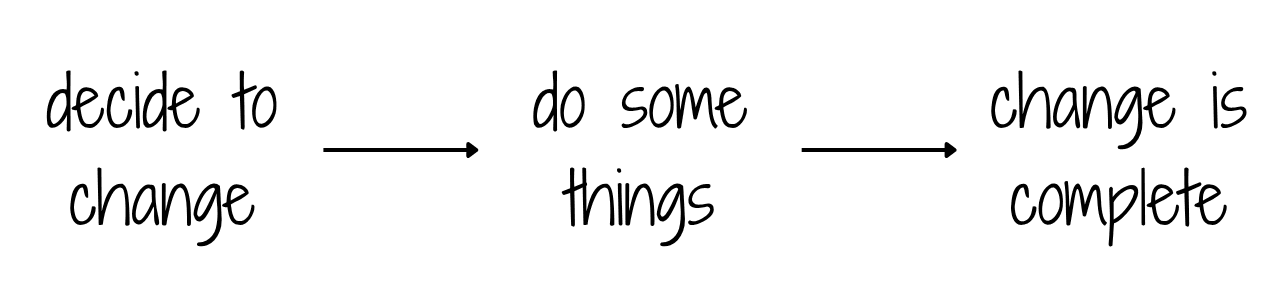
If only it were that easy!
From starting your own business, to losing weight, to quitting the booze, to refocusing a team, we know that change looks much more like this:
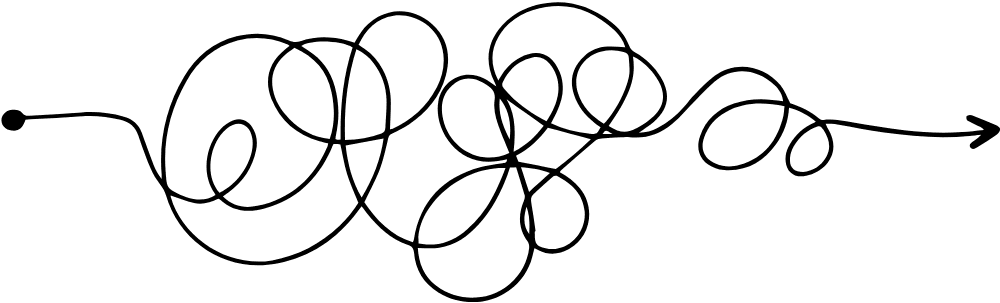
To often, we spend a lot of time focusing on current dissatisfaction or, at the other end of the spectrum, some mythical ideal state.
Doing too much of either ends up keeping us stuck right where we are.
Making change real – turning your “I should…” into “I am…” – means thinking differently AND acting differently.
And different looks like a simple truth:
We DO change more than we ARE change
And in over 35 years of coaching people, teams and organizations to change, I’ve boiled everything down to a simple approach to change:
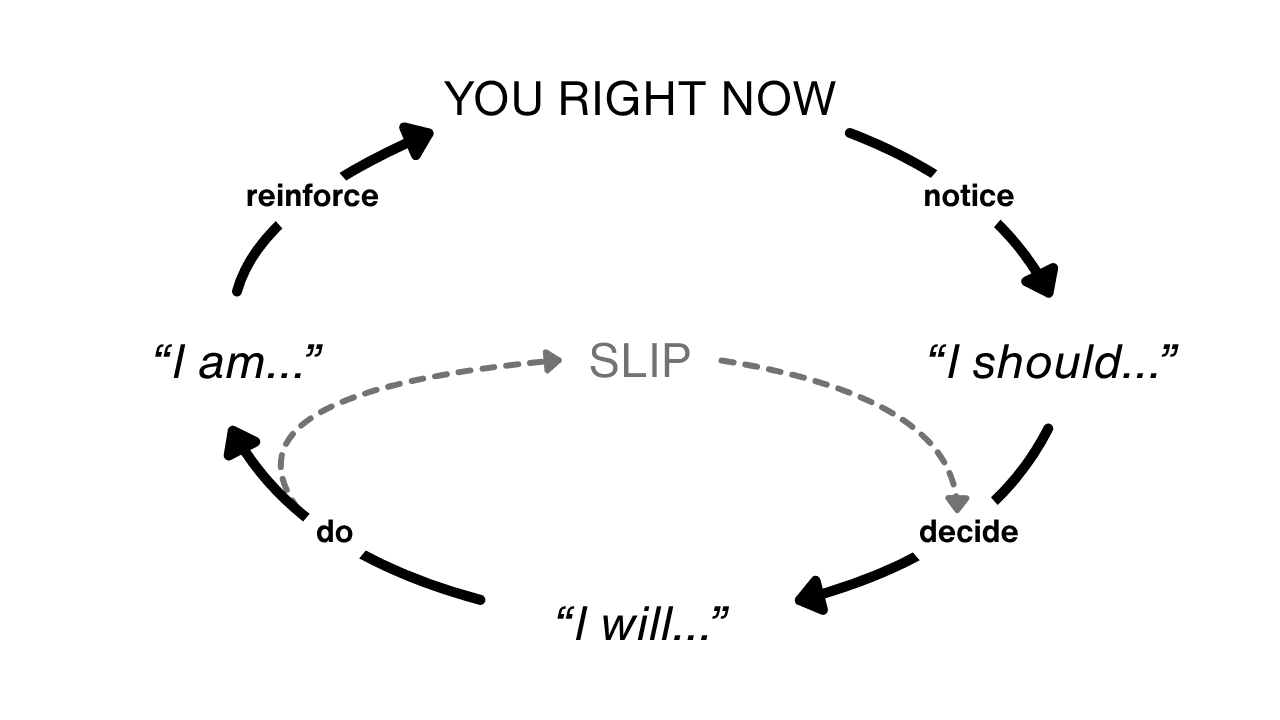
When we DO change, everything happens in that messy middle.
We chunk things down, we try things, do the new, stop doing the old… And, when the inevitable slip happens, we don’t let it break us out of commitments, we just revisit our decisions and get back to to the DOING.
Done right, and with the right partner, this cycle has the potential to shift anything in your life.
We’ve just looked at how to break change down into an cycle of commitment that delivers real, lasting results.
But we all know that it’s not that easy, we all know that it’s hard to get started, hard to keep going, and hard to recognize when to switch approaches.
All of which is where coaching comes in.
You see, I’ve spent a lifetime fascinated by a single question:
Why do people do what they do?
Over the years, that’s led me to some very interesting places – some I enjoyed, some I did not – and ultimately, after my 20 year journey through the corporate labyrinth, to the last 16 years of coaching people through the change they want to make.
Now, I mainly help people via 4 approaches: Intensive Turnarounds, Advisory Coaching, Job Search Coaching, Executive Coaching.
When the change needs to happen right now – due to a crisis or unsustainable context.
Drawing upon Strategic Intervention and Somatic approaches, we go deep and fast, to make the change real and sticky.
Quite often, this work is around reshaping lifelong patterns of behavior and sculpting a very new version of yourself.
1-to-1 coaching on an ongoing, cost-effective basis – a blend of calls and email/text support that helps you stay on track with the changes you want to make. Quite often, my clients use this approach for career reinvention and starting their own business/solidifying their side-gig.
Through my work with Right Management, I provide career management coaching to those hit by a lay-off.
Many people don’t have access to those services, so I offer my Advisory Coaching at a significant discount for those forced into the job market.
When everybody looks to you to lead change, it can be really hard to make the right calls and take the tough decisions.
Quite often, the only support you get is a tired-out slide-deck of change psychology and scripted discussions.
Much better to bring your strengths and natural influencing skills to the fore, even if the organization doesn’t quite trust you to do that.
First, and I want to be really clear about this, I’m not selling a magic bullet or easy solutions. Change doesn’t work that way, and I’m not interested in pretending otherwise.
What I offer is absolute commitment to walk with you on your JOURNEY, helping you:
We DO change more than we ARE change – and I’d love the chance to understand how I might help you do the right thing(s) for yourself.
Book your First Session now – no sales pressure, sign-up or one-size-fits-all.